


6" low step in
Stainless steel tray
3 ways to build
Couldn't load pickup availability
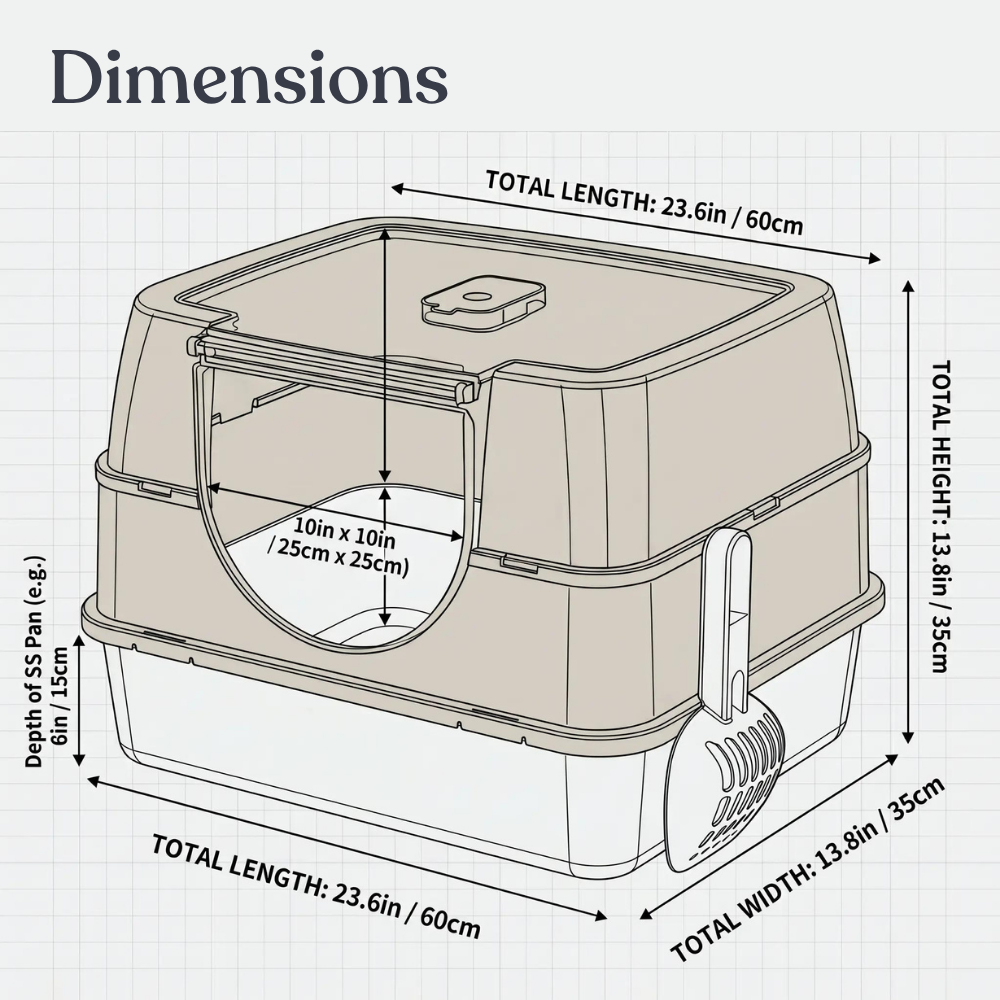
Length: 23.6"
Width: 13.8"
Height: 13.8"
Sized for one cat under 25lbs
1 x Steel tray
1 x Hood
1 x Top lid with clear flap door
1 x and scoop
No tools needed for assembly
Stainless steel tray
Moulded plastic for the hood, lid, and scoop
Purrlix Enclosed Cat Litter Box - Low Entry, Stainless Steel Tray


Steel doesn’t hold what plastic does.
Plastic scratches. Scratched plastic holds bacteria and smell — which is why an old litter box never quite comes clean, however hard you scrub it.
The tray here is stainless steel, the only part waste ever touches. Nothing soaks in, nothing settles into a scratch, and it washes back to new every time.
The rest is built around that. It comes apart in seconds, so the steel actually gets washed. It builds three ways — open tray, tray with walls, or fully covered - so you can customize it every time for your cat who cn't decide.
At a 6" entry it sits lower than most covered boxes, which is kinder to kittens and elderly cats, while still easy to tuck into tight corners.

Compare it yourself.
Here's what you're actually comparing.
Reviews
-
 Sarah M.One of the best buys I’ve made. Stainless is the way to go. There’s like no odor. It’s easy to scoop up, as things don’t really stick to the pan. The size is perfect in this one section of my living room. I’ve not washed the pan just yet, but I imagine it’ll be easier than plastic. The only minor complaint for me: the scooper holes are a little bigger than I’d prefer. Other than that, I don’t think I’ll ever go back to plastic. And at first, my cat wasn’t sure about the new box, but she transitioned just fine. I’m happy.
Purrlix Enclosed Cat Litter Box - Low Entry, Stainless Steel Tray
$79.99
-
 Faby C.I’m really happy with this cat litter box! It feels sturdy and well made, and the size is perfect without taking up too much space. The lid and overall design also make it look neat and clean in the room. It was easy to put together. Overall, I think it’s a great litter box for the price and I would definitely recommend it.
Purrlix Enclosed Cat Litter Box - Low Entry, Stainless Steel Tray
$79.99
-
 Daniella T.This was perfect for my kittens, they got used to it so quick! The box is super easy to adjust - I usually leave the top lid open because the kittens love that more
Purrlix Enclosed Cat Litter Box - Low Entry, Stainless Steel Tray
$79.99


FAQ
No. The tray is stainless steel; the hood, lid and scoop are moulded plastic. That's deliberate. The tray is the only surface waste ever touches, and steel is non-porous — nothing soaks in, and there are no scratches for bacteria to sit in. A steel hood would add weight and cost without making the box any cleaner.
Some cats never will, and no design changes that. Thankfully our litter box offers multiple configurations so don't feel the pressure to stick with a covered box!
Some cats notice it for the first few days, especially in a cold room. Most settle within a week, and a slightly deeper layer of litter evens out the surface if yours is particular about it.
Lift the top lid and scoop daily — nothing comes apart for that. Every few weeks, separate the four pieces and wash the tray with hot water and dish soap. Steel takes that without staining or scratching. Skip steel wool and bleach.
No, and we'd rather you didn't. A liner puts a porous plastic surface back on top of the one part of the box specifically chosen not to be porous. Litter goes straight in the tray.
It will depend. Take the size of your cats and the box's dimensions (13.8" H x 13.8" W x 23.6" L) into consideration.